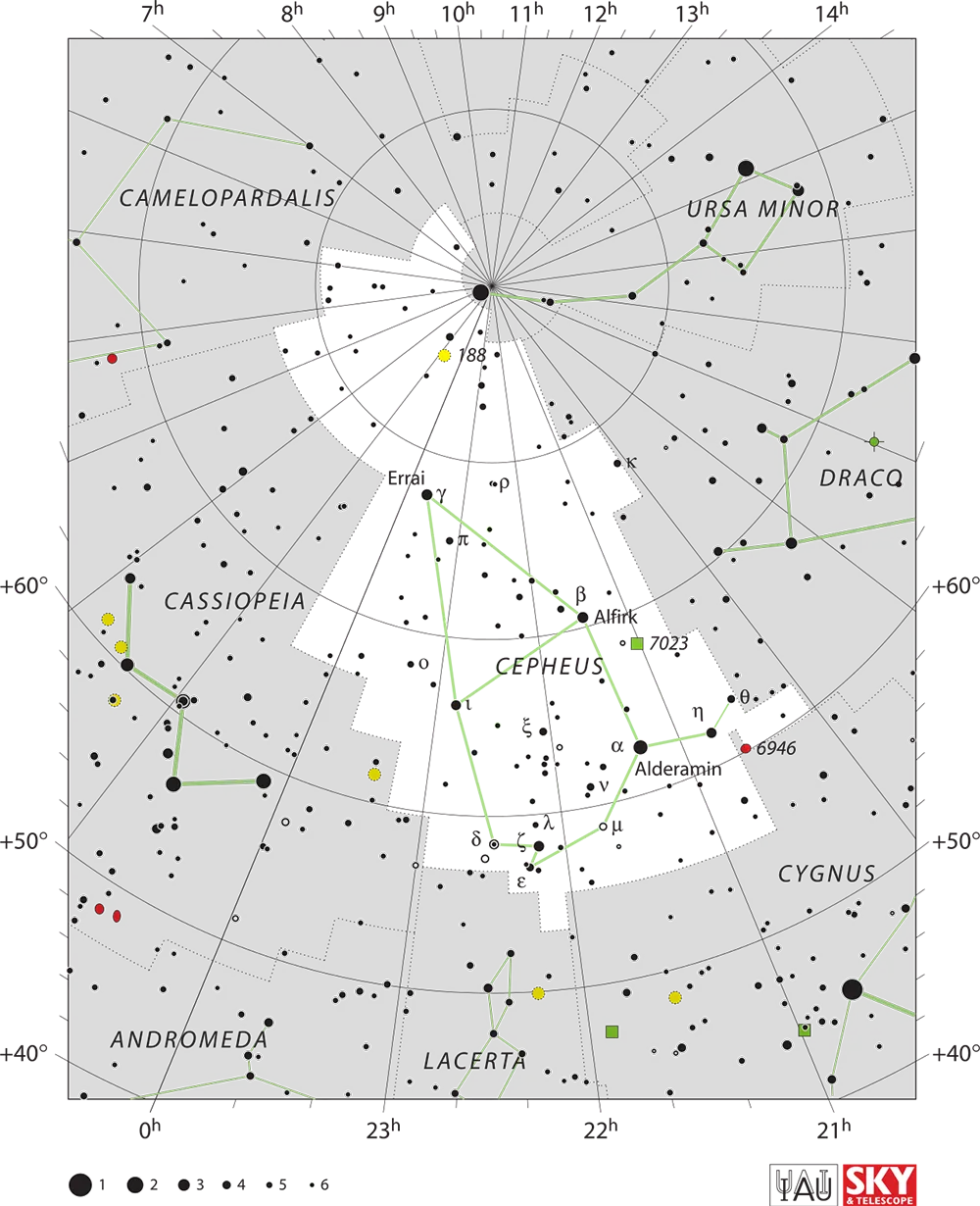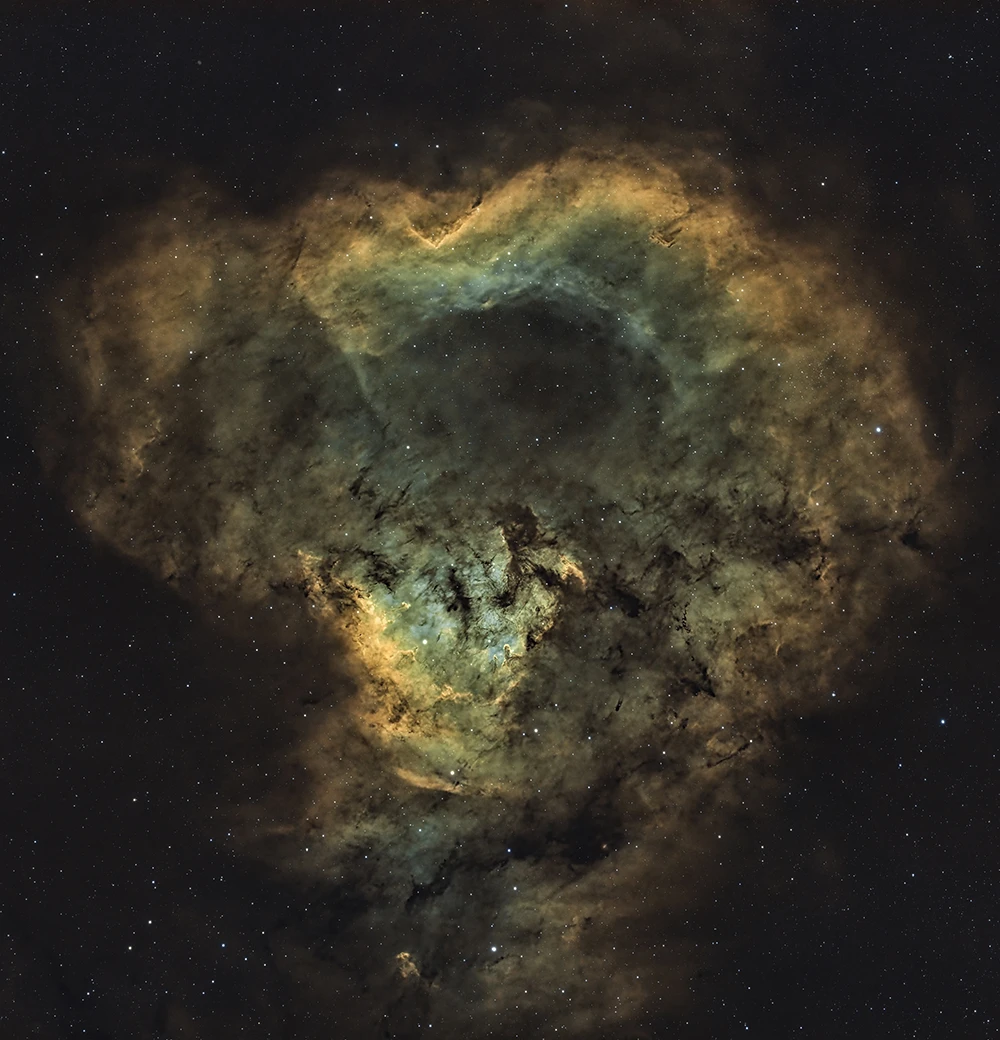
This impressive nebula lies in the constellation of Cepheus close to Polaris and Cassiopeia, see below.
To capture this image I used the nebula rig (see equipment page) and narrow band imaging (Ha, Oiii and SII filters), in total some 12 hours of exposure.
Processing the images
I save all exposures on a USB stick connected to the ASIAIR computer that runs it all. Images of the main object are called Lights. I also take calibration frames called Darks and Flats. Darks are exposures of the same duration and sensor temperature as the Light frames but with the cap put on the telescope, and are used to correct for dead pixels and sensor noise. Flat frames are captured with a dim light in front of the telescope to correct for dust particles on the lens and/or filters and possible vignetting caused by the image train.
The Lights, Darks and Flats are then processed by a program called PixInsight (a computer astrophotography application) to star align, noise reduce and stack the images into one Master image of the object, one for each filter used (here Ha, Oiii and SII).
I then reduce light gradients in the Master image that may come from city lights or other light sources by Dynamic Background Extraction in PixInsight. This is followed by stretching of the images to bring out the details of the object. Thereafter I combine the images from each filter to produce a color image. Then I separate the stars from the nebulosity using the StarXTerminator application. The nebula is then worked on with contrast and saturation adjustments. To get the effects where you want them in the image you can use different masking tools. Finally I put the stars back to the image. Working with the colors gives you some artistic freedom choosing the nuances that works for you. Easy peasy…
Cepheus constellation