
The Elephant´s Trunk Nebula is a concentration of interstellar gas and dust (with some imagination looking like the trunk of an elephant, lower part of the image) within a much larger ionized gas region called IC 1396 situated in the Cygnus region about 2400 light years away from earth. This whole region is ionized by a massive star situated to the east of these clouds making them emit light (emission nebula).
To make this photograph I used narrowband filters for the wavelengths of hydrogen (Ha), oxygen (Oiii) and sulphur (SII) respectively. Below you can see single and stacked images taken with these filters. The stacked images are accumulated single exposures, a process here made by PixInsight – a specific astrophotography program, to increase signal to noise ratio thereby making the nebula more prominent.
Hydrogen (Ha) filter

Oxygen (Oiii) filter

Sulphur (SII) filter
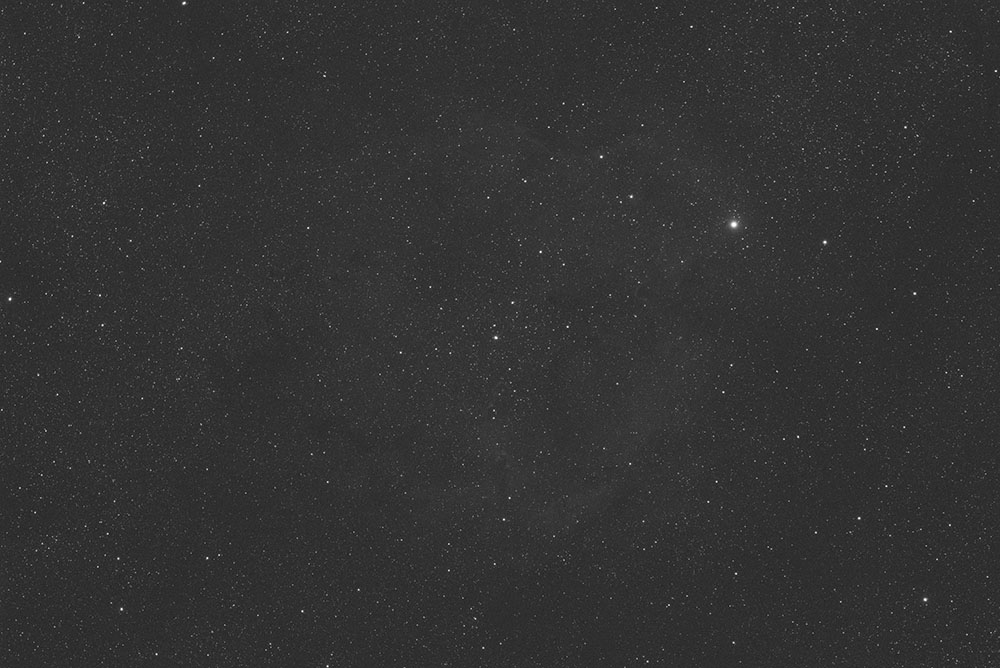
Single 300 second exposures of IC 1396 with narrow band filters hydrogen, oxygen and sulphur.
Stacked Ha image
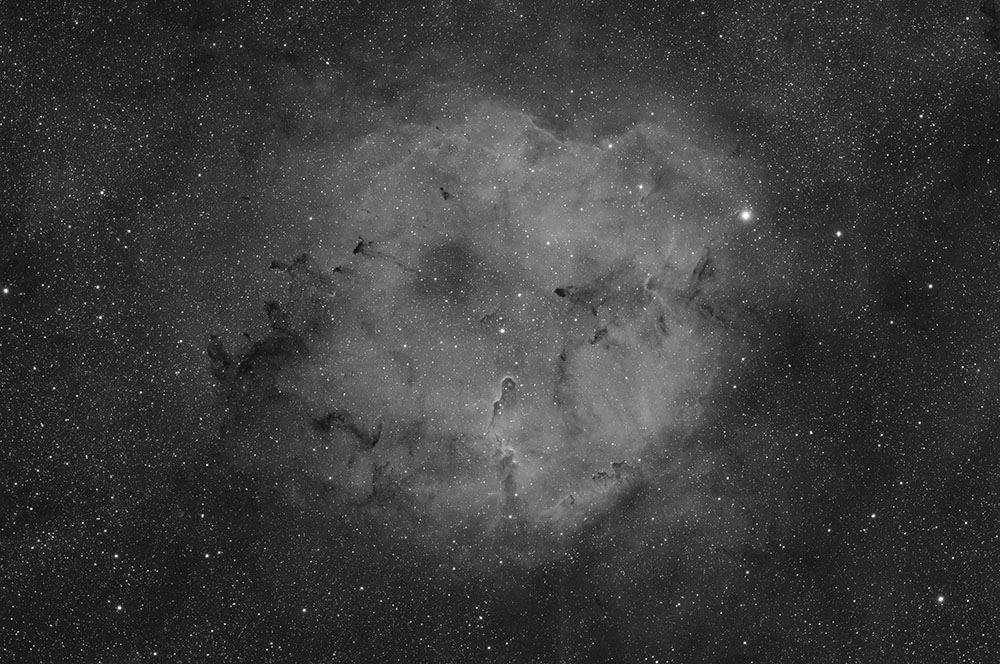
Stacked Oiii image
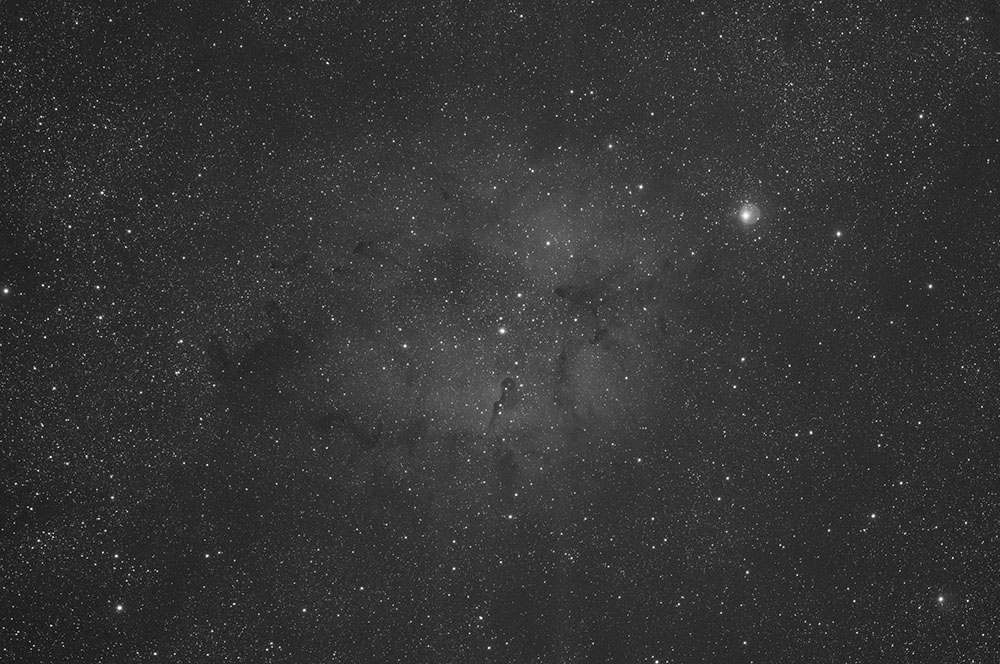
Stacked SII image
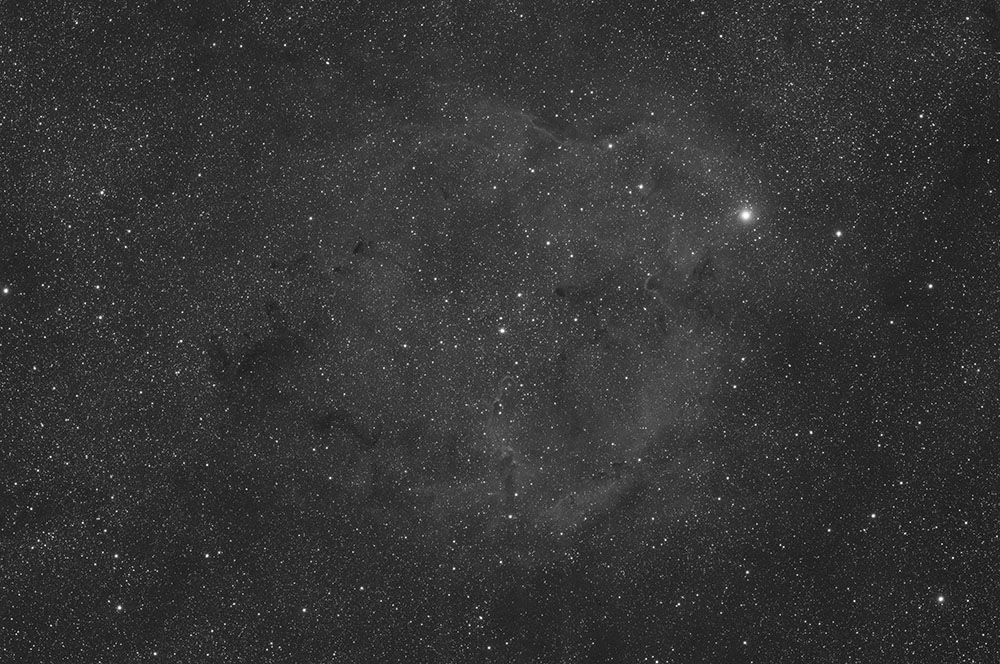
Stacked narrowband images of Ha, Oiii and SII. Total exposure time 7.9 hours. You can see the dominance of hydrogen in this Nebula producing the strongest signal.
I then combined these stacked images using the “Hubble or SHO palette” connecting SII wavelength to red color, Ha to green color and Oiii to blue color. The main reason for using this palette is that more of the details of the nebula becomes visible for you to appreciate. In the picture you can also see black patches which are made up of dark nebula so dense that no or little light can pass through.
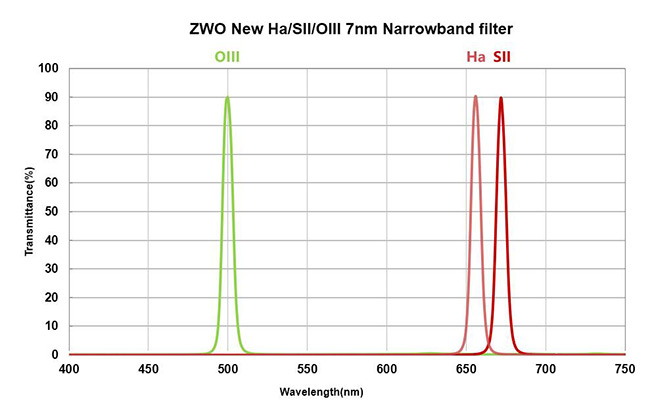
When using a narrow band filter only a small portion of the light bandwidth is let through. I use narrowband filters allowing for 7 nanometers of the light bandwidth to pass through at different wavelengths.
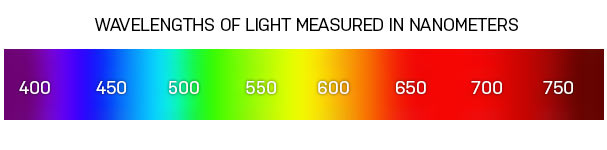
A diagram showing different wavelengths of light measured in nanometers and their corresponding color.