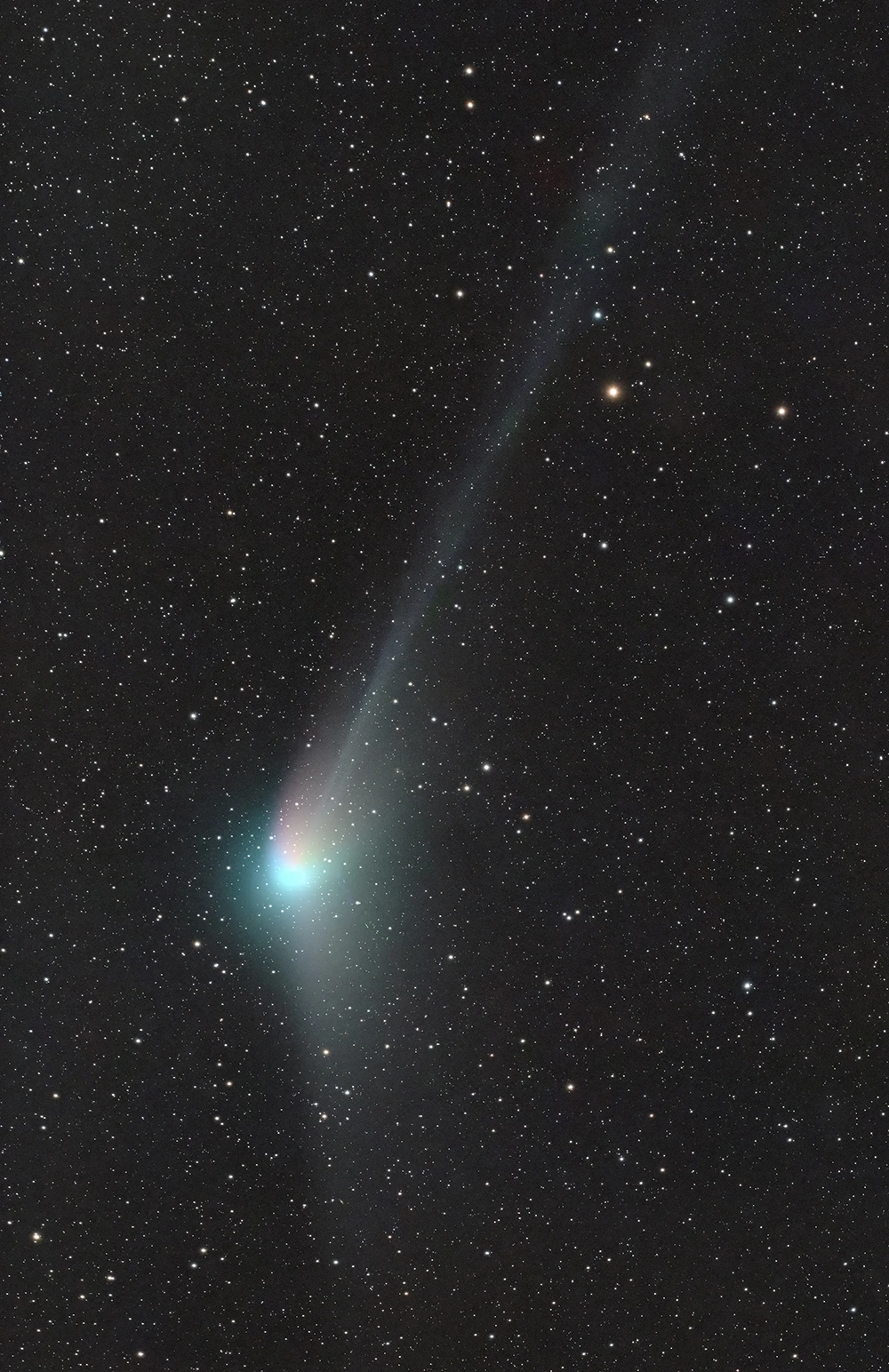
On January 27, 2023 I took this image of the Comet C/2022 E3 (ZTF). The comet nucleus was estimated to be about a kilometer in size and had a greenish color due to the sunlight effect on the carbon and cyan content of the comet. It came as close as 42 million kilometers to earth but was barely visible to the naked eye in a dark moonless night sky. In the picture you can see the long tail of gas and dust but also the anti-tail pointing towards the sun that was visible only during January.
Comets are icy solar system bodies that orbits the sun and releases gases when they are heated closer to the sun. They have been visited by man made uncrewed probes such as NASA´s “Deep Impact” and European Space Agency’s “Rosetta” even landing on the comet. The comet C/2023 A3 (Tsuchinsan-ATLAS) is now approaching earth, has great potential and may become visible to the naked eye in October 2024 possibly even in daylight! We will have to wait and see…
Capturing a faint comet with a telescope and multiple exposures is a bit challenging because the comet moves different to the stars in the night sky. To make this picture I had to separate the comet from the stars and process them individually (see below). In the final image I combined the stars with the comet, all done with PixInsight which is a competent computer program for astrophotography.
Comet aligned starless LRGB image
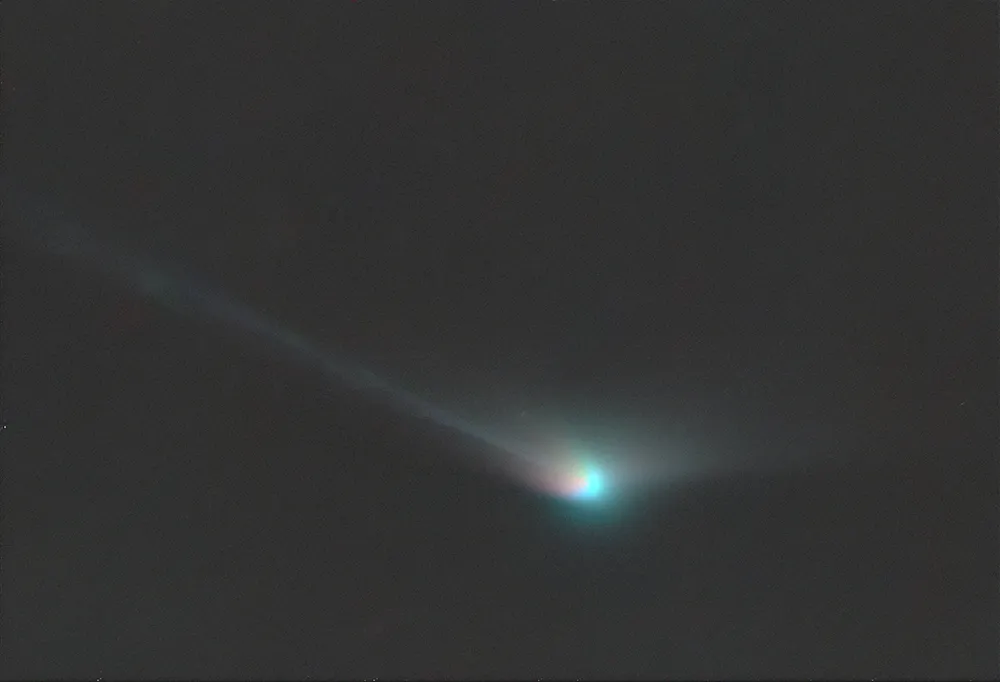
To produce this image I excluded all the stars in all of the luminance, red, green and blue (LRBG) raw images with the program StarXTerminator, a process that took about one night. In the program PixInsight I then aligned the comet in all the luminance, R, G and B images separately and stacked them to increase the signal to noise ratio. Finally the aligned and stacked L,R,G and B images of the comet were combined into one starless LRGB image.
Star aligned master luminance image

Here you see the stacked master luminance image that had been star aligned making the comet look weird. From this image I separated the stars from the distorted comet with StarXTerminator. I then repeated this process with the stacked master red, green and blue images and finally combined them to produce a stacked, star aligned LRGB image.